
Why Import-Export Operations Break Under Pressure, And How to Fix Them
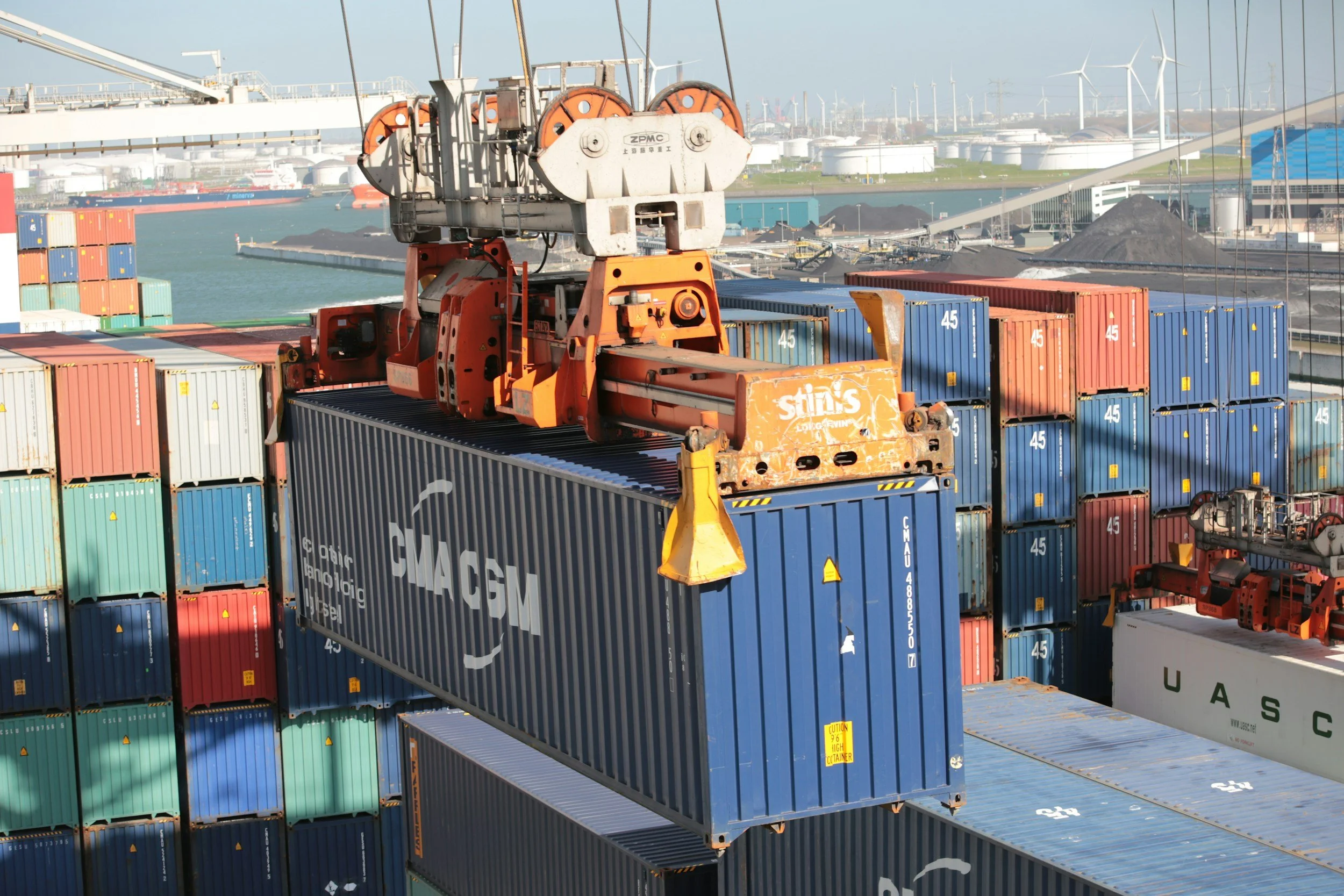
When Operations Are Run on Instinct, Not Intelligence
Import-Export businesses rarely fail because of demand alone. More often, they struggle because operations cannot keep up with opportunities. New markets emerge suddenly, buyer requirements change, compliance expectations shift, and margins fluctuate with currency and logistics volatility. In such conditions, speed, coordination and decision quality matter as much as production capacity.
Yet many import–export operations still rely on fragmented processes: spreadsheets for costing, emails for coordination, manual checks for compliance, and human memory for exceptions. These methods may work in stable conditions, but they break under pressure — precisely when agility is needed most.
This is where AI, when applied correctly, becomes a structural advantage rather than a tactical add-on.
Why Import–Export Operations Are Structurally Complex
Unlike purely domestic businesses, export operations sit at the intersection of multiple systems:
suppliers and production units
buyers with varied standards and expectations
trade documentation and compliance regimes
logistics providers and ports
customs, duties, and tax frameworks
foreign exchange and payment timelines
Each shipment is a coordinated orchestration of decisions, documents and deadlines. A delay or error at any stage ripples across the system.
The challenge is not a lack of data, but the lack of an intelligence layer that connects it all.
AI as an Operational Orchestration Layer, Not Automation
In import–export contexts, AI is often misunderstood as a tool for forecasting or document automation. While useful, these applications barely scratch the surface.
A more powerful approach treats AI as an orchestration layer — one that sits above existing tools and workflows, interpreting context and coordinating actions across the export lifecycle.
Such a system does not replace trade expertise. It augments it by:
maintaining situational awareness across shipments
identifying missing or inconsistent information
guiding teams through the next steps dynamically
reducing reliance on individual memory and manual follow-ups
Inbound Enquiries, Costing and Quote Readiness
Export agility begins long before goods leave the factory.
Inbound enquiries from international buyers often arrive with incomplete specifications, ambiguous volumes or unfamiliar standards. AI-enabled systems can engage these enquiries conversationally, clarifying requirements, identifying applicable certifications and mapping inputs to internal costing logic.
This reduces back-and-forth, shortens response cycles and improves quote confidence — especially critical when competing in new or unfamiliar markets.
Documentation, Compliance and Exception Handling
One of the most fragile parts of export operations is documentation. Invoices, packing lists, certificates, shipping bills and regulatory declarations must align perfectly — and vary by market.
AI systems can:
validate documents against destination-specific requirements
flag inconsistencies before submission
track expiry and validity of certificates
maintain structured records across shipments
More importantly, when exceptions occur — a discrepancy, a delay, a query from customs — the system can surface context immediately, reducing firefighting and escalation time.
Logistics, Tracking and Operational Visibility
Once goods are in transit, operational clarity becomes critical.
AI-enabled intelligence layers can consolidate signals from logistics partners, internal schedules and payment milestones to create a single, coherent operational view. Teams can understand not just where a shipment is, but what depends on it — downstream payments, inventory planning or buyer commitments.
This shifts export management from reactive tracking to proactive coordination.
Payments, FX and Financial Discipline
Export profitability is as much about cash flow as it is about margins.
AI systems can monitor payment timelines, flag delays, correlate them with contractual terms and surface risk patterns across buyers or geographies. When integrated with costing and FX data, this enables more informed pricing, negotiation and market prioritisation decisions.
Over time, financial intelligence becomes embedded into operational workflows rather than sitting in separate reports.
From Individual Experience to Organisational Memory
Perhaps the most overlooked challenge in export operations is continuity. Knowledge about markets, buyers, routes and pitfalls often resides with a few experienced individuals.
AI can act as a second brain for EXIM operations by:
capturing decisions and outcomes across shipments
linking exceptions to root causes
preserving lessons from new market entries
enabling teams to query past cases conversationally
This transforms export capability from a person-dependent function into an organisational asset.
Scaling Agility Without Increasing Risk
As exporters diversify markets and product lines, complexity grows. The temptation is to add more people, more checks and more manual controls.
AI offers a different path: scaling coordination, not headcount.
By embedding intelligence into operational flows, organisations can respond faster to opportunity while maintaining discipline around compliance, quality and finance.
Mitochondria’s Perspective
At Mitochondria, we view import–export AI not as a set of isolated tools, but as a connected intelligence fabric — one that spans enquiry, costing, documentation, logistics, payments and learning.
When AI is designed as infrastructure rather than software, export operations become more resilient, responsive and repeatable. Agility stops being a crisis response and becomes the operating norm.
That distinction matters — especially for businesses and economies aiming to compete globally, not occasionally, but consistently.
—
Mitochondria builds ATP — agentic AI for operations. It learns your workflows, earns autonomy in stages, and runs with governance built in. Your data stays yours. Based in Amsterdam and Pune, working with organisations across Europe and India.