

Insights on Agentic Intelligence, Systems Design & Applied AI

Measuring AI Value: The Economics of New Capability
Most AI ROI measures assume the work is already being done. Applying Goldratt's constraint thinking to AI value: spend, cost per outcome, and new capability.

When Systems Cannot Produce the Answer
Regulators, buyers and auditors want structured answers on fixed cycles. The evidence sits scattered across sites, registers and people, so the work starts as an interview.

How to Run an AI Pilot That Reaches Production
MIT found 95% of GenAI pilots deliver no P&L impact; Gartner expects 40% of agentic AI projects cancelled by 2027. How to scope a pilot that converts.
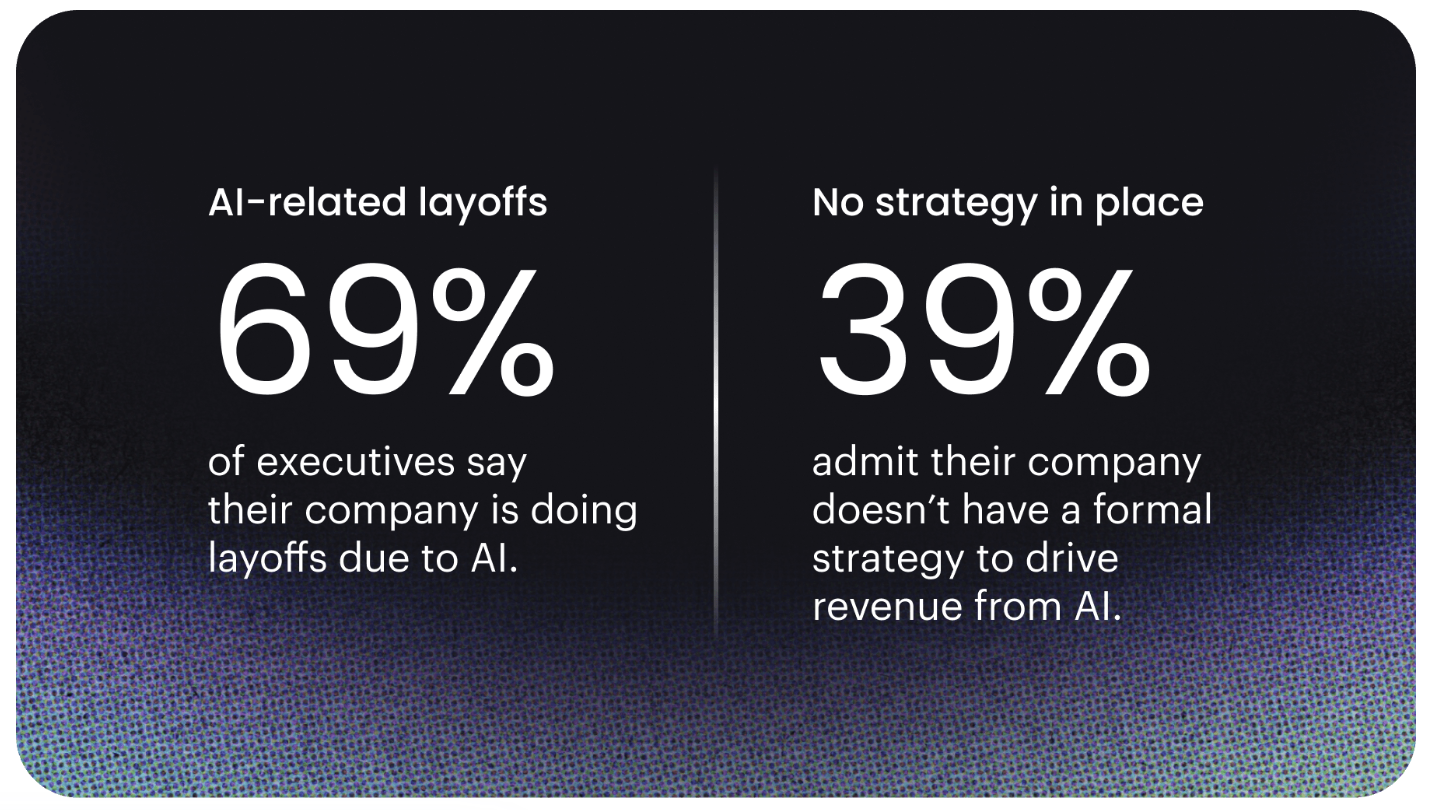
Why Enterprise AI Underdelivers, and What Fixes It
48% of executives call AI adoption a disappointment (Writer, 2026) and 84% never redesigned workflows around it (Deloitte). Four organisational fixes.

What an Enterprise Means When It Says It Wants AI
"We need AI" is not a brief. Translating the request into a workflow, an owner and a boundary, with cases from manufacturing compliance and real estate.

Why Configurable Products Are Hard to Sell Online
Regulation has made funds comparable, and pricing has converged, removing product as a basis for preference. A chat widget bolted onto a finished website does not change the experience around it. The differentiation that remains lies in the intelligence built into the journey itself.

The Questions Enterprises Should Ask Before Deploying Agentic AI
Enterprise procurement was built for software that informs. Agentic systems act, and the evaluation has to change with them. Sharing questions to put to any vendor, on authority, adoption and ownership, and why the answers matter more than the demonstration.

Why Investor Experience Is a Key Differentiator
Regulation has made funds comparable, and pricing has converged, removing product as a basis for preference. A chat widget bolted onto a finished website does not change the experience around it. The differentiation that remains lies in the intelligence built into the journey itself.

Mitochondria has joined the Sarvam Startup Program
Our Indian entity has been accepted into the Sarvam Startup Program, a cohort of teams building on Sarvam's stack of speech, language and translation models for Indian languages. A short note on what this means for us, and for the voice work we have been doing across financial services, manufacturing, agriculture, public transport, research, and cross-border trade.

The Purchase Conversation: How Communication Science Reshapes eCommerce
Petty and Cacioppo's Elaboration Likelihood Model describes two processing routes that operate during most purchase decisions. Central processing assesses the product's merits. Peripheral processing responds to how the information is presented, by whom, and whether the interaction seems trustworthy. A system that addresses both routes is producing significantly more valuable results than one that handles only the first. This is the design space that Cornea, our commerce intelligence product, occupies.

What Happens When a Manufacturing Business Automates Its First Workflow
Quote generation in manufacturing is seldom anyone's main role. It is handled by managers, salespeople, and engineers alongside their core duties, which results in response times varying from hours to days, some quotes never being sent, and no tracking in place. We introduced an agentic system into this process. Within the first month, the lead-to-follow-up cycle reduced from about three days to just five minutes. What happened afterwards was more intriguing than the speed improvement alone.

The Quiet Shift in Manufacturing Intelligence
The typical response to knowledge dependency in manufacturing is documentation. This method has been tried for decades and often falls short. The reason lies in its structure: documentation is a separate task from the work itself. An engineer who has just finished a complex assessment is immediately faced with the next enquiry. Choosing between documenting and starting the next task is never a true choice. Any solution that adds extra effort will face the same limitation.

Step by Step, Ferociously
Most companies default to one or the other. They are either patient and gentle, building carefully but without urgency, or they are aggressive and impatient, shipping fast but accumulating debt in the form of shortcuts that eventually require correction. The combination is rarer and more difficult to sustain. This piece describes how it operates in practice.

When AI Builds What the Organisation Always Needed
The most valuable outcome of an AI deployment is often not the system itself but the structured operational knowledge that the implementation process creates. This perspective examines how that knowledge is built, why it compounds, and what it means for how organisations should evaluate AI investment.

Where Competitive Advantage Lives in an AI-First Company
The technology is commoditised. Foundation models are open-source or accessible through APIs at declining cost. Cloud infrastructure is available on demand. Agent frameworks are proliferating. Any company with competent engineering can assemble a capable AI system. The question that remains, and the one that determines which companies survive the next five years, is where competitive advantage lives when the underlying technology is no longer a differentiator. Three frameworks, from McKinsey, from venture capital moat analysis, and from AI-first operating model research, converge on the same answer. The advantage is not in the AI. It is in what the AI learns about a specific context, how that learning compounds over time, and how difficult it becomes to replicate once the system is embedded in the operations it serves.

5 Skills That Become More Valuable With Greater AI Adoption
There is a framework circulating from Elevation Capital that identifies five skills that become more valuable with deeper AI adoption. Taste: AI generates, you decide if it is right for your brand. Context synthesis: AI handles tasks, you connect dots across functions. Judgement: AI creates options, you choose the right one. Strategic instinct: AI optimises, you question whether it is the right problem. Trust building: AI writes your messages, you build relationships. The framework is appealing because it offers reassurance. Humans are not displaced by AI. They are elevated by it. The reassurance is warranted, but the framework is incomplete. It describes the division of labour between human and machine. It does not describe how that division is operationalised inside an organisation. And the operationalisation is where most deployments succeed or fail.

How Persuasive Communication Enables and Accelerates Enterprise AI Deployments
There is a technique in applied persuasion that works reliably across industries, cultures, and seniority levels. You do not describe the prospect's problem. You describe a pattern. You make it neutral, common, non-accusatory. Knowledge living in people rather than systems. Decisions made with partial context. Automation existing, but intelligence fragmented. Then you ask which of these feels familiar. What happens next is the important part: they start supplying the intelligence themselves. They tell you where it hurts, how it developed, who is affected, and what they have already tried. The conversation has shifted from persuasion to recognition. And that shift determines whether the deployment that follows will succeed or stall.
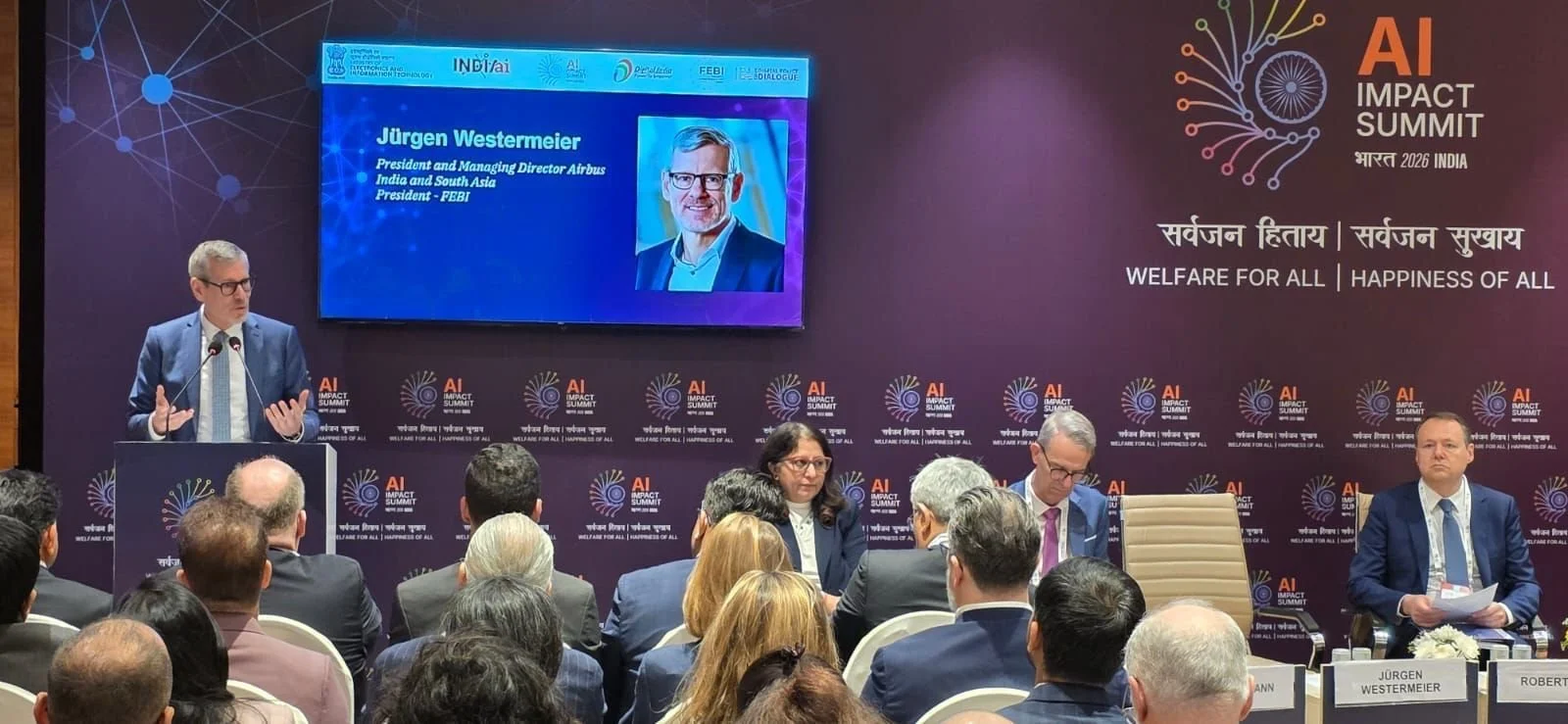
Enterprise AI in the EU-India Corridor
The twin transition is not two parallel initiatives. It is one integrated industrial strategy where digital transformation and sustainability are mutually dependent. At the India AI Impact Summit 2026, a roundtable organised by the Federation of European Business in India brought together the EU Commission, Airbus, Schneider Electric, SAP, Ericsson, and Merck Life Science to examine what this integration requires from AI. The answer was consistent across every panellist: AI embedded in operational design from the outset, governance as architecture rather than afterthought, trust as the precondition for enterprise adoption, and interoperability across the EU-India regulatory landscape. This is the corridor Mitochondria was built for.
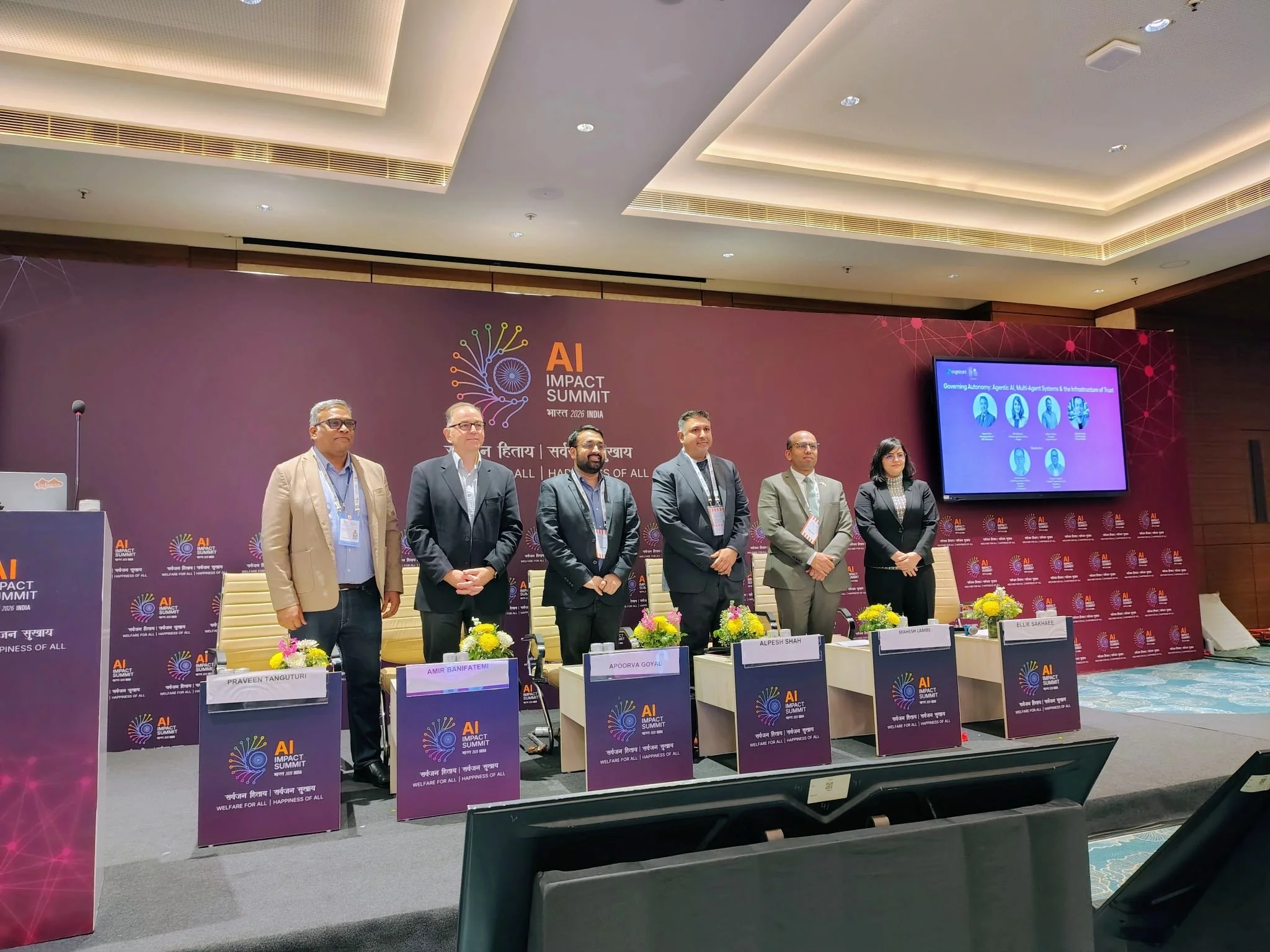
Minimal Viable Trust for Agentic AI
Apoorva Goyal of Insight Partners, a firm managing close to $90 billion in assets under management, meets approximately 100 AI companies a month. His assessment of what separates the companies that scale from those that stall is unambiguous: governance is not a compliance function bolted onto the product after traction. It is the product. Enterprises today lead procurement conversations with questions about auditability, traceability, data handling, and kill switches before they discuss capability. The costs of agentic AI going wrong are high enough that organisations will spend millions ensuring governance is in place before signing a contract worth half that. This inversion, where trust precedes capability in the buying decision, is the defining dynamic of the agentic AI market.
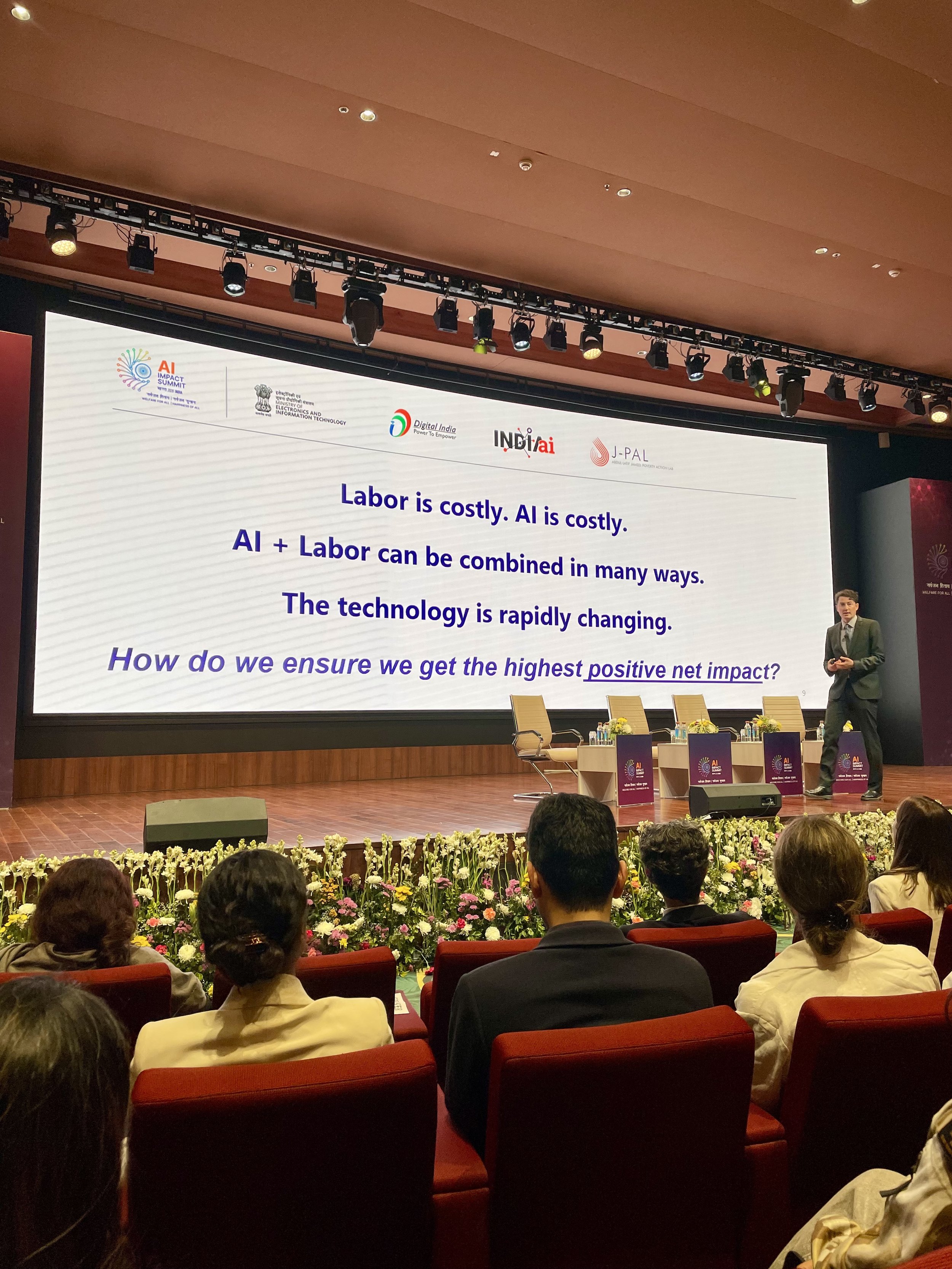
The Evidence Gap in Every AI Deployment Decision
Yanagizawa-Drott presented a scenario to the audience involving district hospitals in Uttar Pradesh. He explained that AI can either automate diagnosis or augment the doctor's decision-making. 90% preferred augmentation. He then shared evidence from a randomised experiment in Ghana, where full automation increased hiring success by 70%, while the augmented approach performed worst. The key question is not which method is better overall, but what evidence supports your choice in your particular context.