

Insights on Agentic Intelligence, Systems Design & Applied AI
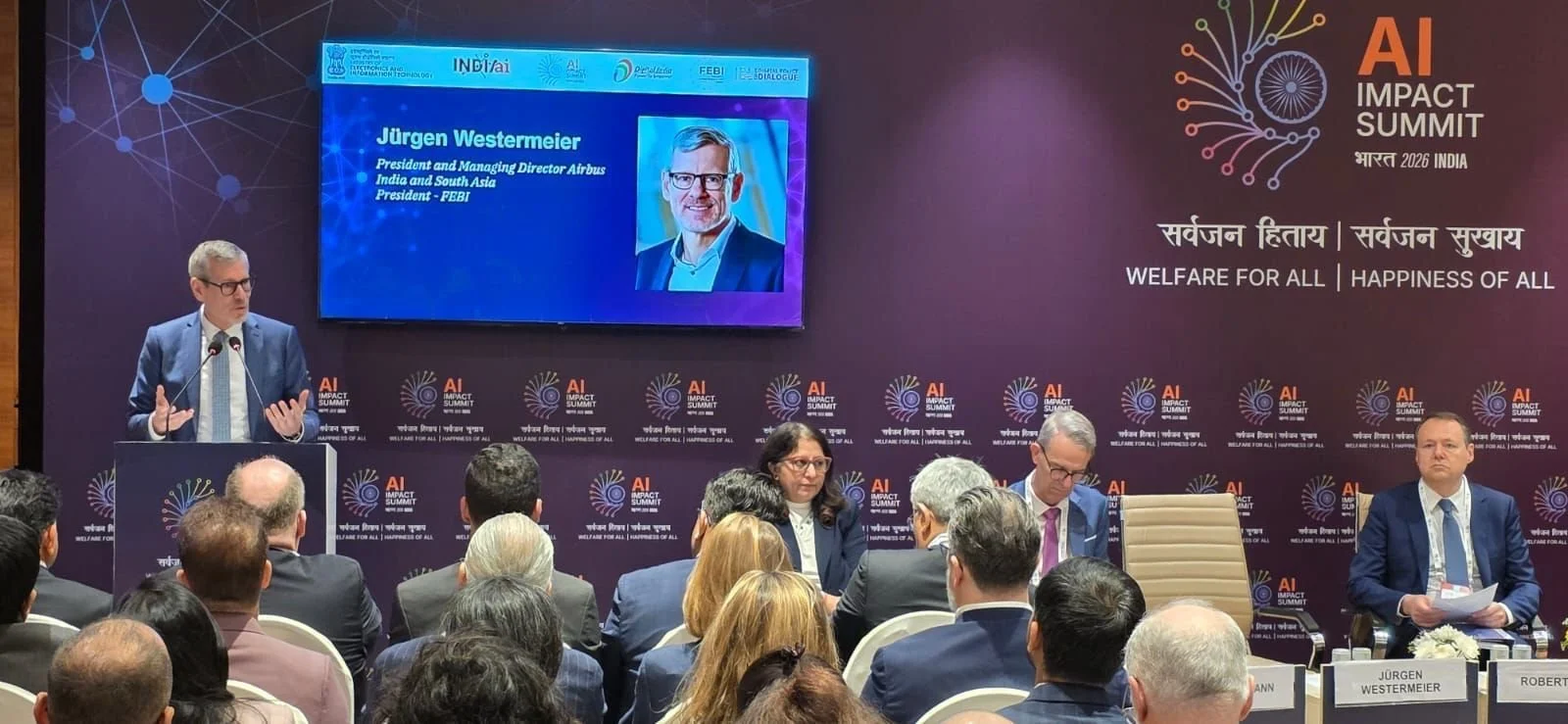
Enterprise AI in the EU-India Corridor
The twin transition is not two parallel initiatives. It is one integrated industrial strategy where digital transformation and sustainability are mutually dependent. At the India AI Impact Summit 2026, a roundtable organised by the Federation of European Business in India brought together the EU Commission, Airbus, Schneider Electric, SAP, Ericsson, and Merck Life Science to examine what this integration requires from AI. The answer was consistent across every panellist: AI embedded in operational design from the outset, governance as architecture rather than afterthought, trust as the precondition for enterprise adoption, and interoperability across the EU-India regulatory landscape. This is the corridor Mitochondria was built for.
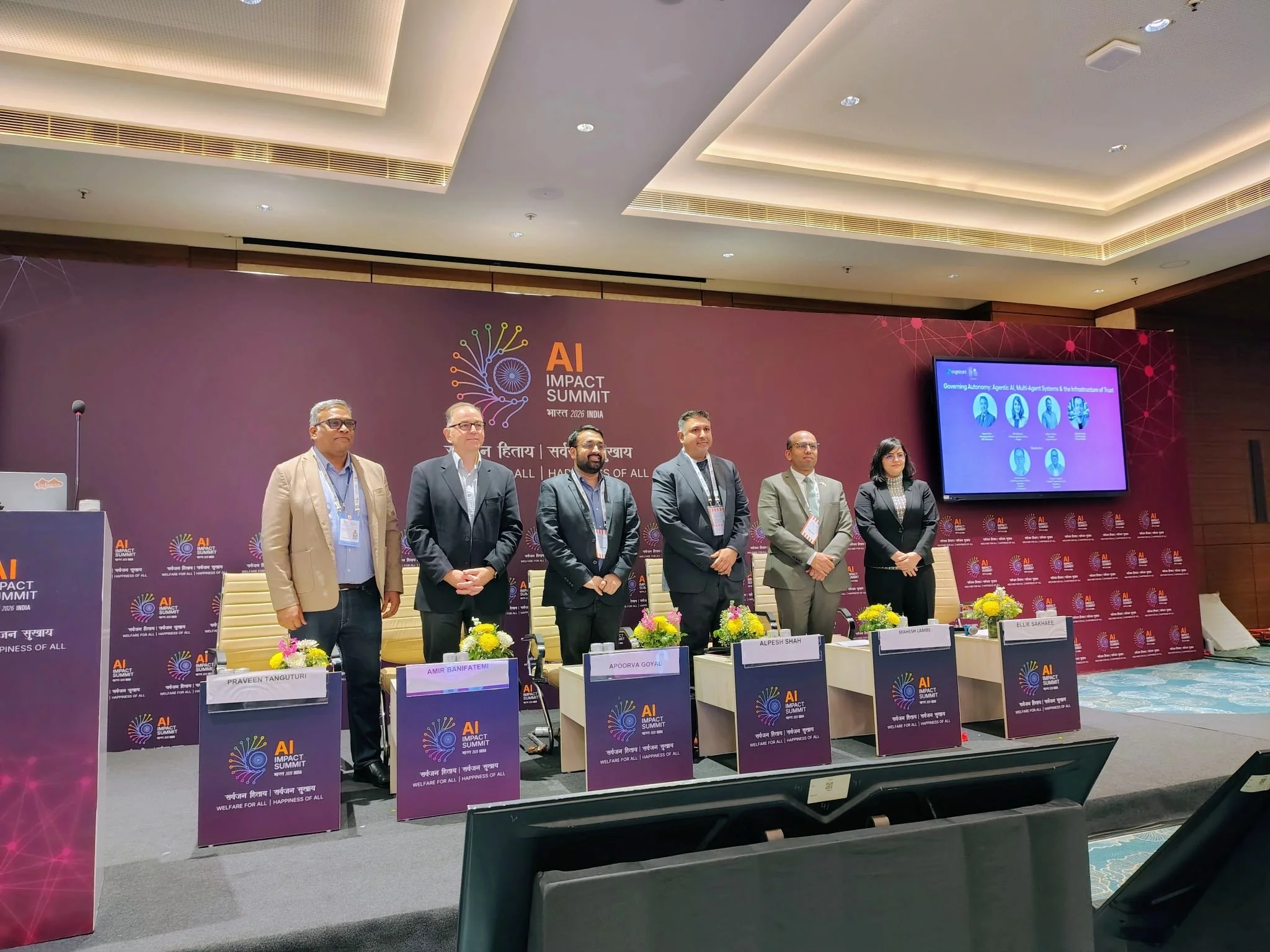
Minimal Viable Trust for Agentic AI
Apoorva Goyal of Insight Partners, a firm managing close to $90 billion in assets under management, meets approximately 100 AI companies a month. His assessment of what separates the companies that scale from those that stall is unambiguous: governance is not a compliance function bolted onto the product after traction. It is the product. Enterprises today lead procurement conversations with questions about auditability, traceability, data handling, and kill switches before they discuss capability. The costs of agentic AI going wrong are high enough that organisations will spend millions ensuring governance is in place before signing a contract worth half that. This inversion, where trust precedes capability in the buying decision, is the defining dynamic of the agentic AI market.
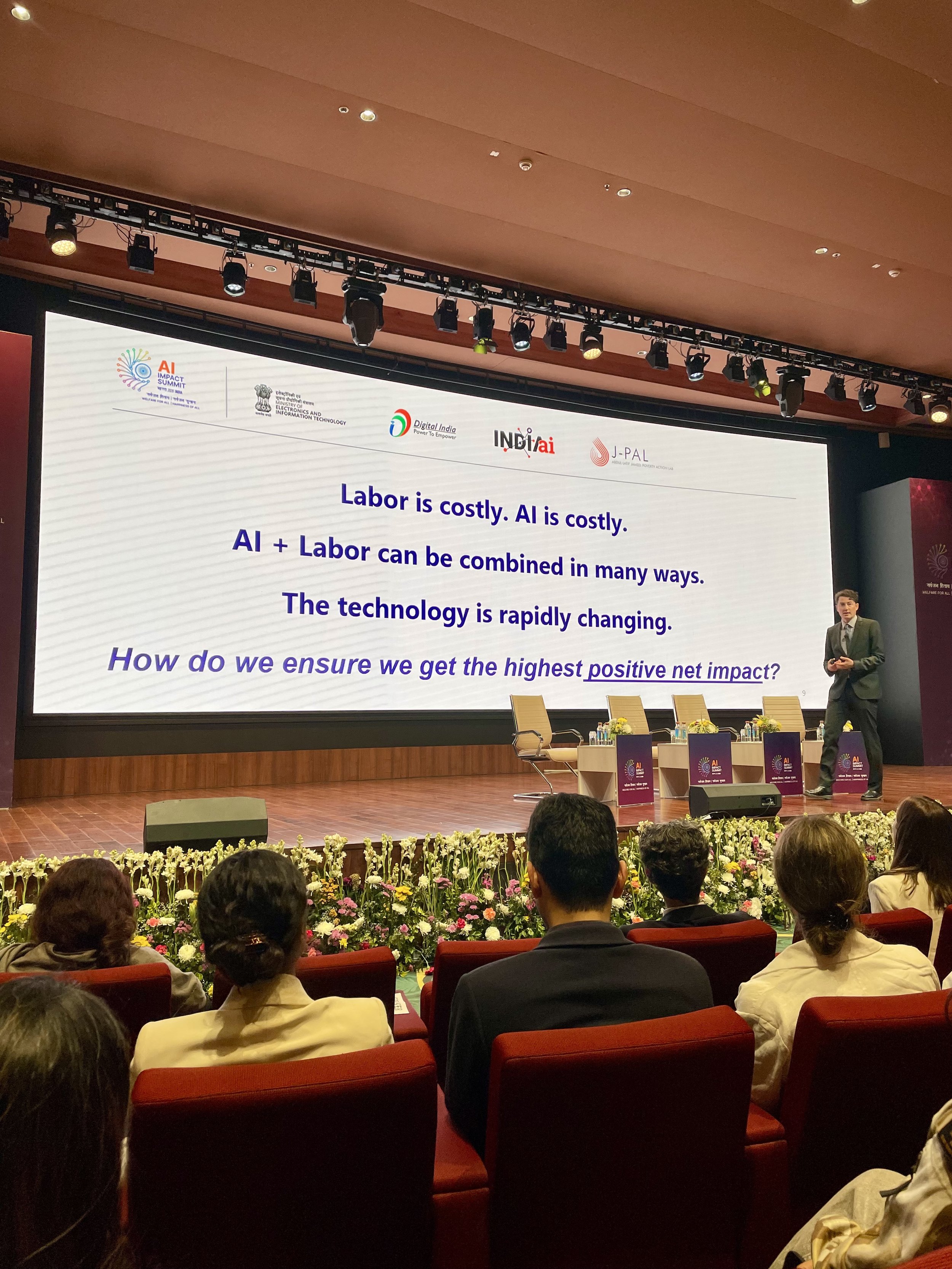
The Evidence Gap in Every AI Deployment Decision
Yanagizawa-Drott presented a scenario to the audience involving district hospitals in Uttar Pradesh. He explained that AI can either automate diagnosis or augment the doctor's decision-making. 90% preferred augmentation. He then shared evidence from a randomised experiment in Ghana, where full automation increased hiring success by 70%, while the augmented approach performed worst. The key question is not which method is better overall, but what evidence supports your choice in your particular context.
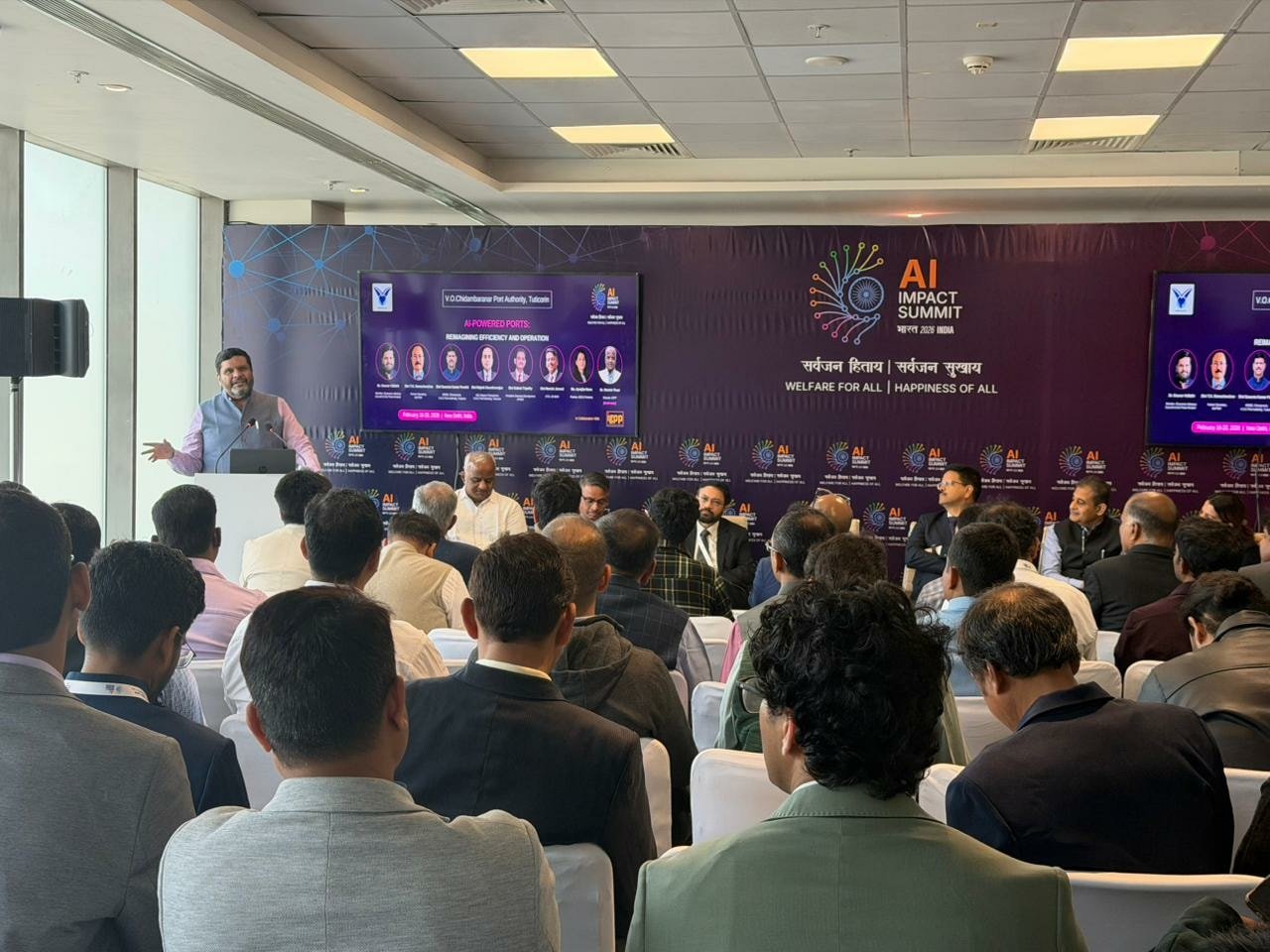
From Smart Ports to Thinking Ports
India's port infrastructure handles 95% of the country's trade volume and 70% by value. The physical capacity exists. What does not yet exist, at most ports, is the intelligence layer that would connect fragmented systems, standardise processes across stakeholders, and enable the shift from reactive operations to anticipatory decision-making. The distinction between a smart port and a thinking port, articulated at the India AI Impact Summit 2026, captures the challenge precisely. Smart ports have technology. Thinking ports have judgement. The distance between the two is architectural.
What Infrastructure Teams Already Know About Scaling AI
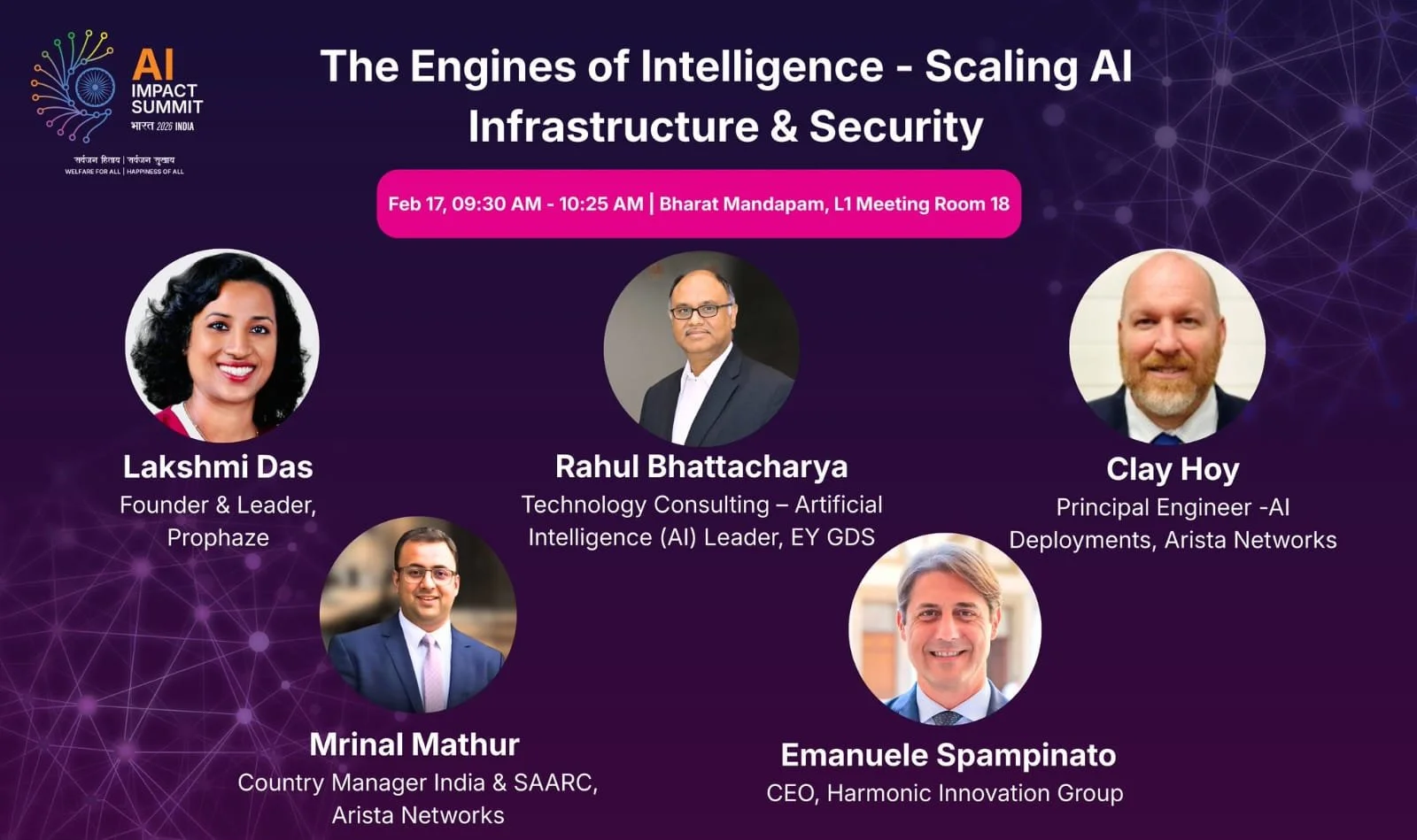
The moderator asked the room to raise their hands. Compute, networking, data pipelines, security, or organisational operating model: which is the biggest barrier to scaling AI? The infrastructure professionals, the people who spend their days building networks and securing systems, pointed to organisation and operating model. The people closest to the technology understand something that the broader AI conversation has been slow to absorb. The machinery works. The question is whether the organisation around it is designed to let it.
93% Confidence, 9% Architecture: The Real Barrier to Industrial AI
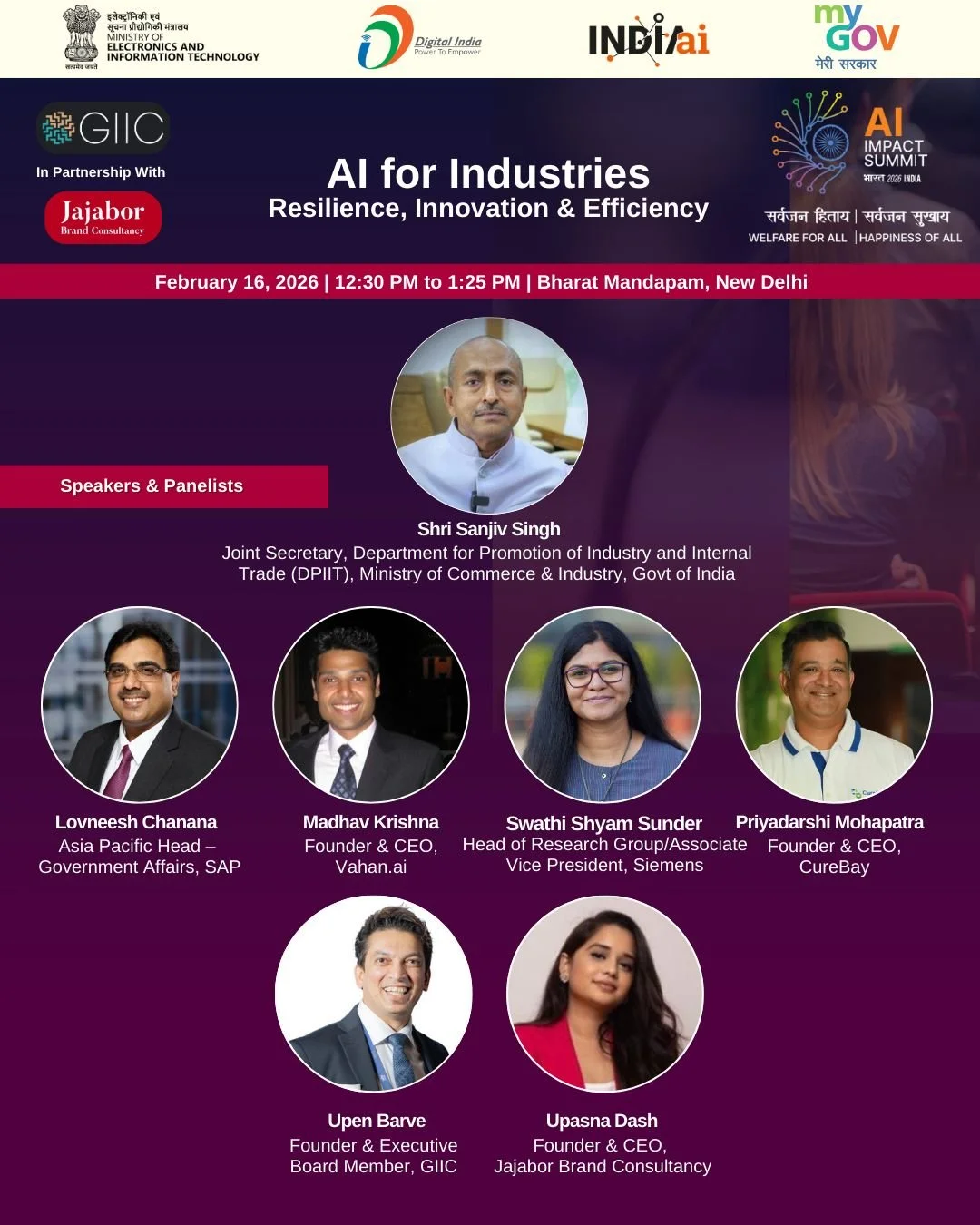
The confidence is there. Ninety-three percent of CXOs surveyed believe they will see positive returns on AI investments within one to three years. The ambition is there. Indian organisations expect AI-supported business processes to nearly double, from 23% to 41%, within two years. What remains absent is the architecture to deliver on either. Only nine percent of organisations are approaching AI holistically. The rest are running pilots, accumulating enthusiasm, and waiting for something to bridge the distance between demonstration and production. That bridge is architectural, and building it requires a fundamentally different approach to how AI enters an organisation.
From Principles to Systems in Agricultural AI
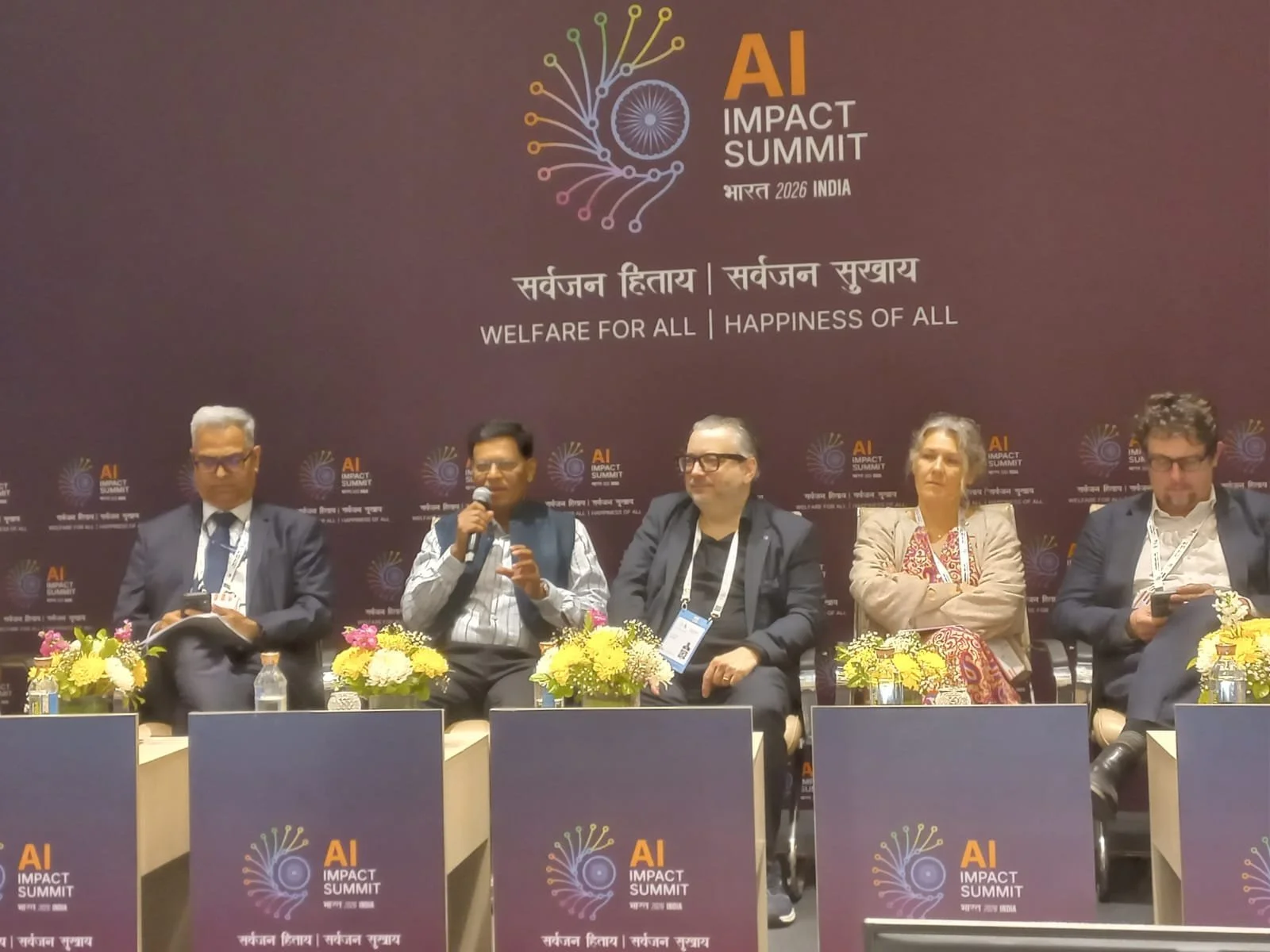
The principles are settled. Inclusive. Governed. Co-designed. Data-sovereign. Open. Every panel at every agricultural technology gathering now recites these commitments with genuine conviction. What remains unsettled is how these principles translate into systems that actually function across the full complexity of a smallholder's operational reality. The gap between principled consensus and operational architecture is where agricultural AI will either fulfil its promise or join a long history of development technologies that worked in demonstrations and dissolved in practice.