
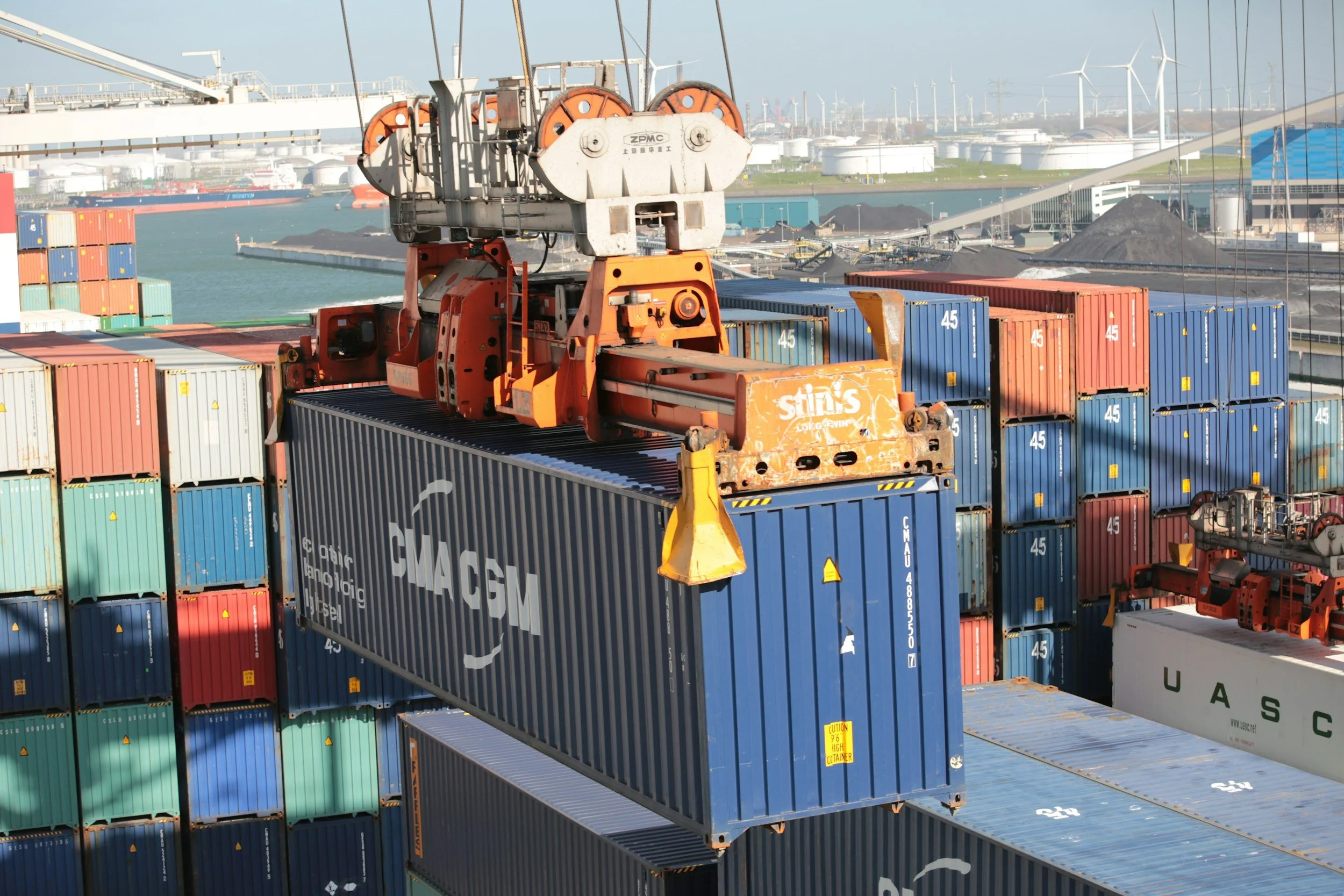
India's total exports of goods and services reached a record $863.11 billion in FY26, according to the Commerce Ministry, including $441.78 billion in merchandise exports. New trade agreements, including the one concluded with the EU in January 2026, promise further growth.
Import-export businesses rarely struggle because of demand alone. More often, operations cannot keep up with opportunity. New markets open quickly, buyer requirements change, compliance expectations tighten, and margins move with currency and freight. In those conditions, speed, coordination and decision quality matter as much as production capacity.
Yet many trade operations still run on fragmented processes: spreadsheets for costing, email for coordination, manual checks for compliance and people's memory for exceptions. These work in calm conditions. They break under pressure, exactly when agility matters most.
Why trade operations are structurally complex
An export business sits where many systems meet:
suppliers and production units;
buyers with different standards and expectations;
trade documents and compliance regimes;
freight forwarders, shipping lines and ports;
customs, duties and tax rules;
foreign exchange and payment terms.
Each shipment is a coordinated set of decisions, documents and deadlines. A delay or error at one stage ripples through the rest. The problem is rarely a lack of data. It is the lack of a layer that connects it.
Paperwork is going digital, unevenly
Trade documentation is in the middle of a long shift from paper to digital. The WTO's Trade Facilitation Agreement, in force since 2017, commits members to simplify procedures, publish requirements and move towards single windows. India's customs single window, operating through ICEGATE since 2016, lets importers and exporters lodge documents once for several agencies. India's Foreign Trade Policy 2023 continues the shift towards paperless trade.
The law is catching up too. UNCITRAL's Model Law on Electronic Transferable Records gives digital bills of lading and similar documents the same standing as paper, and the UK's Electronic Trade Documents Act 2023 put that into law for one of the world's major trading hubs. Over time, more of the trade document chain will be digital end to end.
The shift helps, but it does not remove the coordination work. Someone still has to make sure the invoice, packing list, certificates and declarations agree with each other, and with what each destination requires.
Evidence requirements are rising
At the same time, buyers and regulators are asking for more evidence. EU importers now face CBAM obligations on the embedded emissions of steel, aluminium, cement, fertilisers and other covered goods. Deforestation rules apply to commodities such as coffee, cocoa, soy, rubber and wood. European customers reporting under the CSRD ask suppliers for sustainability data. Each requirement adds documents, data and deadlines to every shipment.
Enquiries, costing and quote readiness
Export agility starts long before goods leave the factory. Enquiries from international buyers often arrive with incomplete specifications, ambiguous volumes or unfamiliar standards. An AI system can engage those enquiries in conversation: clarifying requirements, identifying the certifications a market needs, and mapping inputs to internal costing, including freight, duties, and currency. That shortens the back-and-forth and improves confidence in the quote, which matters most when entering a new market.
Documents, compliance and exceptions
Documentation is one of the most fragile parts of trade. Invoices, packing lists, certificates of origin, shipping bills and regulatory declarations must agree exactly, and requirements vary by market. A well-designed system can:
check documents against destination-specific requirements;
flag inconsistencies between documents before submission;
track the validity and expiry of certificates;
keep structured records for every shipment.
When exceptions occur, such as a discrepancy, a delay or a query from customs, the system brings the full context forward immediately. People spend their time resolving the problem, not reconstructing it.
Visibility across the shipment
Once goods are moving, clarity matters. Bringing together signals from forwarders, internal schedules and payment milestones gives one coherent view. Teams see not only where a shipment is, but what depends on it: payments, stock planning and commitments to buyers. Management shifts from reacting to anticipating.
People stay at the centre of trade
Trade runs on relationships and judgement: negotiating with a new buyer, choosing a forwarder after a bad season, deciding whether to absorb a cost. Those stay with people. AI takes on the coordination, checking and follow-up that consume their days, so experienced trade professionals spend more time on the decisions and relationships that grow the business.
Questions for trade businesses
How long does it take to answer a new international enquiry with a confident quote?
How often do documents disagree, and when is it discovered?
Which certificates and approvals are due to expire in the next 90 days?
Which buyers or markets now ask for emissions, origin or sustainability evidence?
What happens to exceptions when the person who usually handles them is away?
How Mitochondria's agentic AI systems support trade operations
The approach. Mitochondria's research in import-export operations starts by mapping how enquiries, costing, documents and shipments move through the business today. Units for quotes, compliance evidence and sustainability disclosures are configured to each business's markets, products, documents and rules.
What it enables. Faster, more confident quotes for international enquiries; documents checked against each other and against destination requirements before submission; certificates tracked before they expire; and evidence ready for buyers and regulators. Every shipment leaves a structured record.
The impact. Trade operations that keep up with opportunity, fewer shipments held on paperwork, and experienced people freed to grow the business.
Read more about sustainability and compliance.
Sources
Angel One (PTI), India records highest-ever exports of $863.11 billion in FY26
World Trade Organisation, Trade Facilitation Agreement (in force 2017).
UNCITRAL (2017). Model Law on Electronic Transferable Records.
UK Electronic Trade Documents Act 2023.
Government of India, Foreign Trade Policy 2023.
—
Mitochondria builds agentic AI for evidence-led core operations. Research-led and model-agnostic. ISO/IEC 27001:2022 certified, with controls aligned to the GDPR, UK GDPR, India's DPDP Act and Australia's Privacy Act. Amsterdam and Pune. Request a working session →