
Image Courtesy: BAIF Facebook
At some point in any technology's maturation, the community around it reaches moral consensus before it reaches operational capability. The language becomes sophisticated, the frameworks principled, and the shared commitments sincere. Yet implementations on the ground stay incremental, solving individual problems with individual tools while the systemic challenge waits.
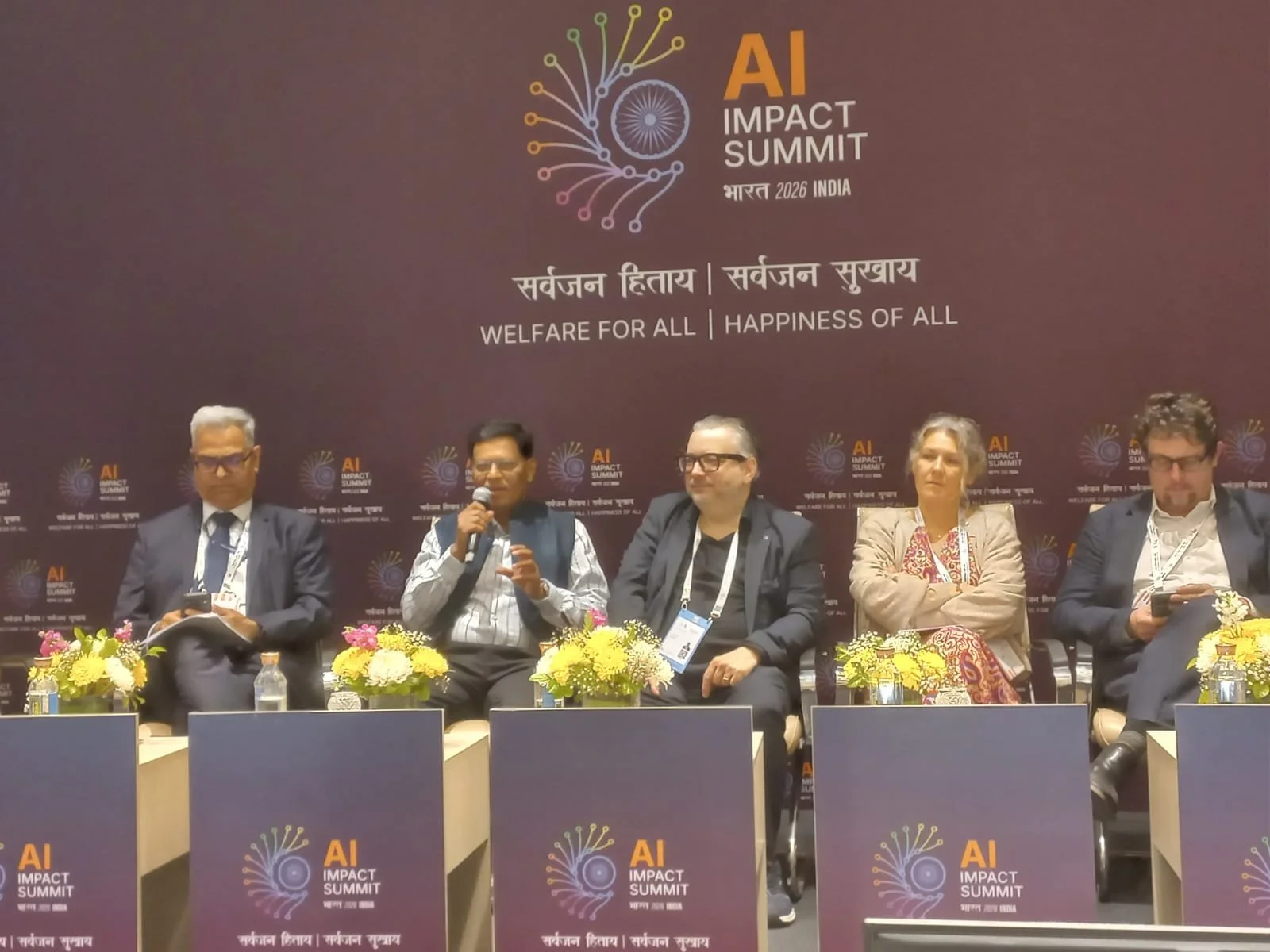
Agricultural AI has reached that moment. At the India AI Impact Summit 2026, a roundtable on AI for smart and resilient agriculture, chaired by Dr Thierry Caquet of INRAE, brought together the FAO, INRAE, BAIF Development Research Foundation and several European research and innovation organisations. The discussion drew on real field knowledge. It also highlighted the gap between where thinking has reached and where the building remains.
The principles are no longer in dispute
The depth of agreement was striking. AI must be inclusive by design: in data, in governance and in who has a voice. The FAO's Digital Agriculture AI Roadmap, launched in December 2024, builds this in. INRAE's data policy, as open as possible and as closed as necessary, puts it into institutional practice. BAIF's decades of work with millions of farming families grounds it in the reality of reaching communities that development programmes often miss.
Data sovereignty has become a first-order concern. Agricultural AI generates valuable data, from animal genetics to soil readings to yields. Dr Bharat Kakade, President of BAIF, was direct: the information must benefit the farmers it comes from. That is a question of architecture, not only compliance.
Co-design with farmers is moving from method to conviction. A farmer's knowledge of their land, microclimate, livestock and markets is foundational data no satellite or sensor can replace. Henri Verdier of Inria invoked the philosopher Ivan Illich, who argued that simple, transparent tools serve people, while complex, opaque ones end up controlling them. That is a design specification: transparency, simplicity and accessibility are the constraints a system must work within.
Agriculture is where the science of adoption began
There is history here. The study of how innovations spread began in agriculture. In 1943, Bryce Ryan and Neal Gross studied how Iowa farmers adopted hybrid seed corn and found that farmers relied far more on neighbours and trusted local sources than on official information. Everett Rogers built his theory of the diffusion of innovations on that foundation.
The lesson still holds. Farmers adopt what they can see working on farms like theirs, explained by people they trust, in their own language. Agricultural AI that ignores this will be ignored, too.
The tools exist; the system does not
When the conversation turned to what is operating in fields, the examples were impressive and isolated. AI-enabled collars for livestock monitoring: heat detection, nutrition and health. A collaboration between the Agriculture Development Trust in Baramati, Microsoft and Oxford University on sugarcane productivity. PlantNet, an open-source application that recognises a vast range of plant species and diseases. Voice AI prototypes designed to bypass literacy and interface barriers.
Each is valuable. Each addresses one problem in one domain. Soil monitoring exists. Livestock tracking exists. Crop advisory, market prices, weather prediction and pest detection all exist. What does not yet exist at scale is the layer that connects them.
Consider the reality Dr Kakade described. An Indian smallholder manages crops, livestock and, increasingly, solar generation on the same small plot. These interactions form the farming system. Crop residues feed livestock. Manure feeds the soil. Solar panels share space with cultivation. Water serves several needs at once. Timing sales of crops, milk and surplus energy requires decisions across domains that most advisory tools treat separately. A farmer using one tool for soil, another for livestock and another for pests manages three separate information relationships, none aware of the others.
National infrastructure is arriving
Public investment is changing the foundations. India's Digital Agriculture Mission, approved in September 2024 with an outlay of ₹2,817 crore, is building AgriStack: farmer registries, geo-referenced village maps and a crop sown registry. In time, these give agricultural AI a shared, consented base of farmer and field data to work from, rather than each tool collecting its own.
The integrated layer the panel implied would sit on top of that infrastructure, connecting the national data with the f’ own knowledge and the tools already in use.
The most ambitious idea is still being demonstrated
The most architecturally ambitious idea in the session was INRAE's work on digital twins of farms: models of a whole farm as an integrated system, so a farmer can see the consequences of a change before making it. The Twin Farms project is building nine demonstration sites in France, and Carole Caranta of INRAE acknowledged that the science is a very big challenge.
The timeline matters. The hundreds of millions of smallholders the panel kept returning to are making decisions this season about inputs, water, livestock and market timing. They need integrated support now, even if it starts simpler than a full digital twin.
What integration requires
An integrated layer for a mixed farm would keep track across domains, understanding that a decision about crop rotation affects livestock feed and soil health. It would learn the conditions of a particular farm: soil, water, microclimate and market access. It would earn trust in stages, starting with advice where the farmer decides everything, and taking on more only as it proves reliable in that context. It would also create structured records as a by-product, making the farm more legible to the farmer, lenders, buyers, and policymakers.
Olivier Lépine of BradTechnology insisted on ground truth: predictions are only as good as accurate, local, current data, and building that sensor infrastructure is unglamorous but foundational. The point goes further. Ground truth includes the farmer's knowledge of which corner floods first, which breed does best locally, and which buyer pays reliably. That tacit knowledge is the most valuable data in any farming system, and the hardest for tools to capture. Systems that ask good questions, in the farmer's language, by voice, can capture it.
What field work shows
Mitochondria's research with an agricultural services company in India, serving more than 100,000 registered farmers across several states, found the same gaps the panel described. Farmers engaged once and then went quiet. Support channels were fragmented, with no view of what farmers were asking or whether their concerns were resolved. Field teams relied on informal, inconsistent messages rather than accurate guidance. Farmer profiles, transactions, crop data and locations all existed in back-end systems, but had never been connected into a conversation that met farmers where they were.
Seasonal and local context decided everything. Harvest timing differs between states. Loan applications cluster in particular weeks. Price expectations are shaped more by informal market talk than by official data. A system that does not know these rhythms becomes one more channel farmers ignore.
Questions for agricultural organisations
Which farmer data already exists across your systems, and is it connected?
In which languages, and through which channels, do your farmers prefer to communicate?
How do you know what farmers are asking, and whether you've resolved their questions?
Who benefits from the data your farmers generate, and do they know?
Which seasonal rhythms should your support follow?
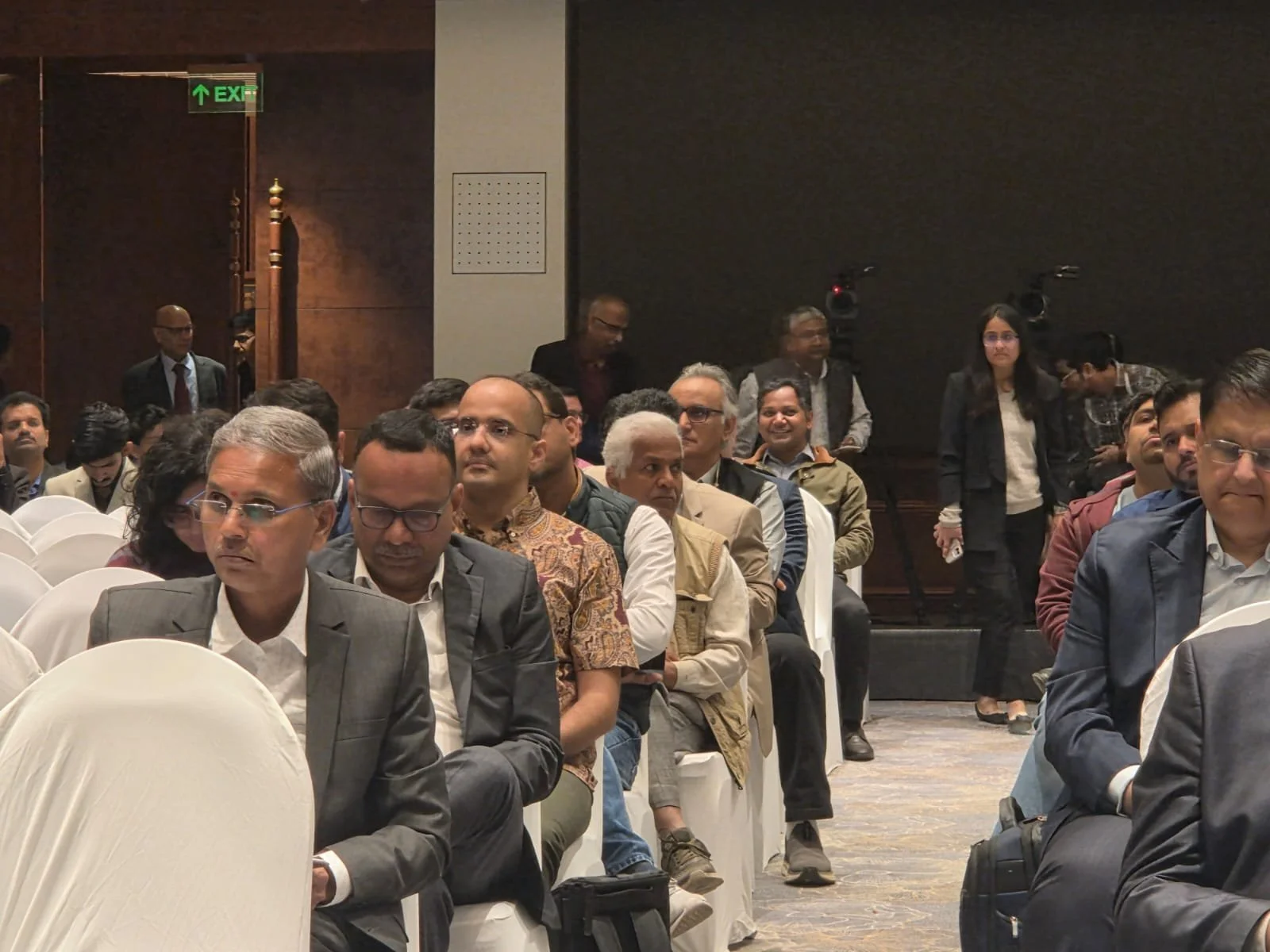
Image Courtesy: BAIF Facebook / Nikita & Sushrut (co-founders, Mitochondria) amongst the audience
How Mitochondria's agentic AI systems support agricultural organisations
The approach. Each deployment starts by mapping how the organisation and its farmers communicate: channels, languages, seasons, and recurring questions. Systems work by voice and WhatsApp in Indian languages, configured to the organisation's agronomy, products and data.
What it enables. Consistent, accurate guidance for farmers, connected to what the organisation already knows about each farm, with field teams brought in when judgement is needed. Every conversation adds to structured records the organisation and its farmers can use, including compliance evidence for buyers.
The impact. Farmers who stay engaged because the support fits their farm and their language, and organisations that finally see what their farmers need.
Read more about sustainability and compliance.
Sources
Roundtable on AI for smart and resilient agriculture, India AI Impact Summit 2026 (chaired by INRAE), as presented
FAO (2024). Digital Agriculture AI Roadmap.
Ryan, B. and Gross, N. C. (1943). The diffusion of hybrid seed corn in two Iowa communities. Rural Sociology, 8(1).
Rogers, E. M. (2003). Diffusion of Innovations (5th edition).
Illich, I. (1973). Tools for Conviviality.
Government of India (2024). Digital Agriculture Mission (AgriStack).
—
Mitochondria builds agentic AI for evidence-led core operations. Research-led and model-agnostic. ISO/IEC 27001:2022 certified, with controls aligned to the GDPR, UK GDPR, India's DPDP Act and Australia's Privacy Act. Amsterdam and Pune. Request a working session →